It is a manufacturing process key to achieving both compatibility
and safety.
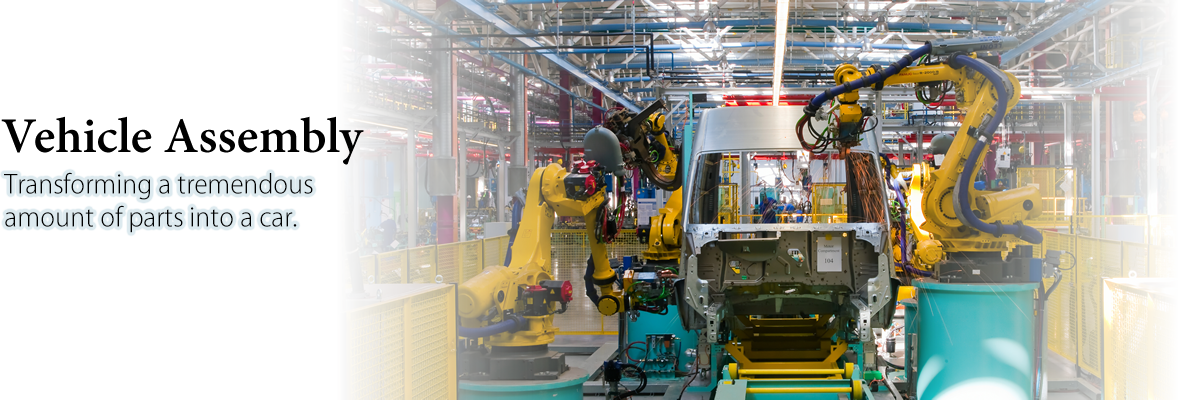
Even in equipment planning, emphasizing the harmony between people
and facilities, designing lines flexibly requiring thorough pursuit
of quality and efficiency.
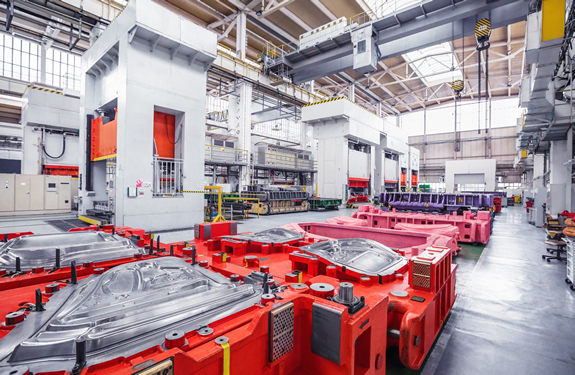
In recent years, as the weight of the car body is required to be
reduced, the technology of the press that aims to strengthen the
body without increasing the thickness of the steel sheet is an
important process that is responsible for the safety and design of
the car body.
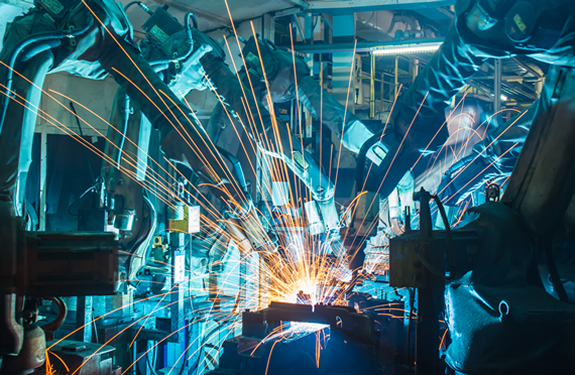
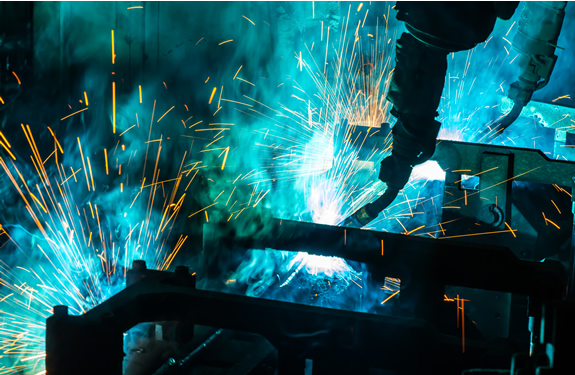
In addition to conventional technologies such as spot welding in
which base materials are joined together by resistive heat, we are
actively working on new technologies such as friction welding by
friction heat and rivet method.

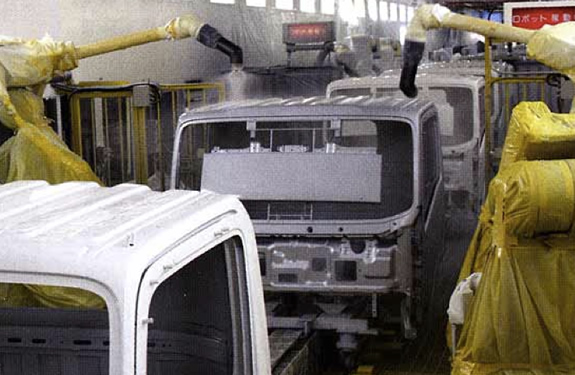
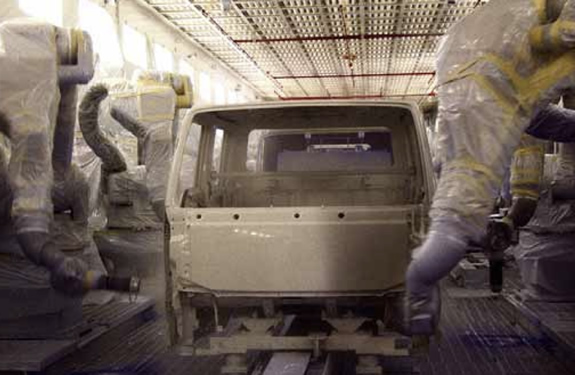
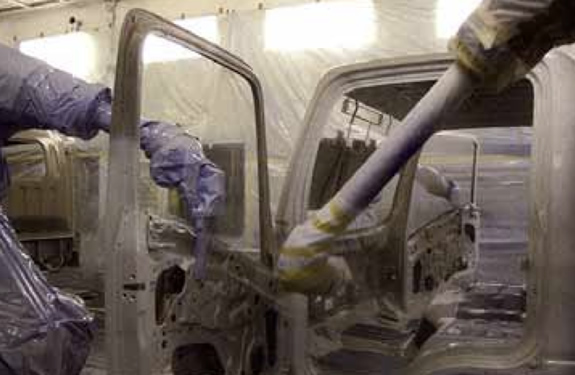
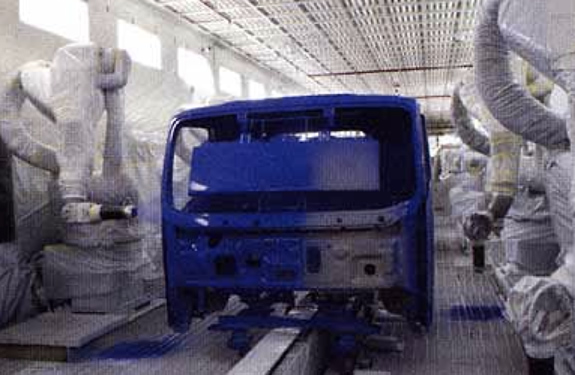
This is the process that gives the gray iron shell its vivid
appearance and color.
Paint is required to not only add color to the car, but to also
function as a guard to protect the car body from fading, scratches,
and rust.
In the painting process, the application of paint and
high-temperature drying are repeated, taking about 8 hours to
complete the painting of one car.
Since heat is used, this is the most energy-intensive process in a
car body shop, and thus energy conservation is highly important.
The processes of priming, top-coating, baking, polishing, and
inspection involve the use of cutting-edge technologies that are
constantly evolving, so we must always be ready to take on new
challenges and tackle new tasks.

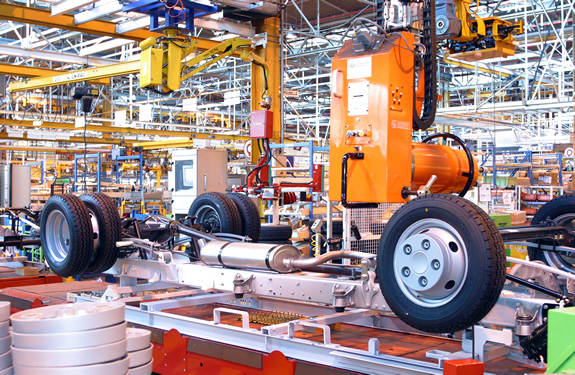
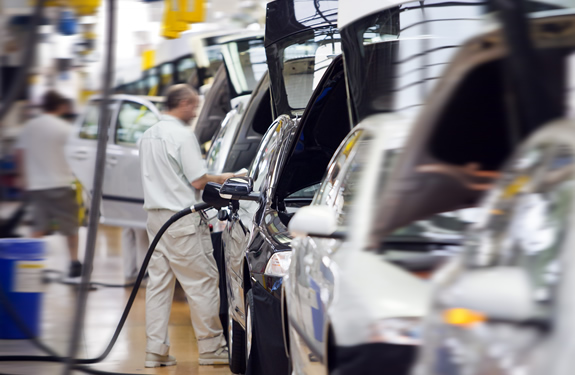
Every single part has its own function. Lights, seats, steering wheels, engines, etc., are meticulously installed breathing life into the car. The process requires the precision to handle thousands of parts, and the flexibility to respond to the electronic, automated, lightweight, and multi-material nature of automobiles due to advances in safety technology and materials.